
Transforming the Stouffville GO Transit Line into an Electric LRT Line
My vision is to transform the Stouffville GO Transit commuter line into an Electric LRT line, plan all GO (parking lot) stations as complete NOCs, and develop an Economic Development Plan that will drive all-day, two-way traffic in the Stouffville GO Transit line corridor.
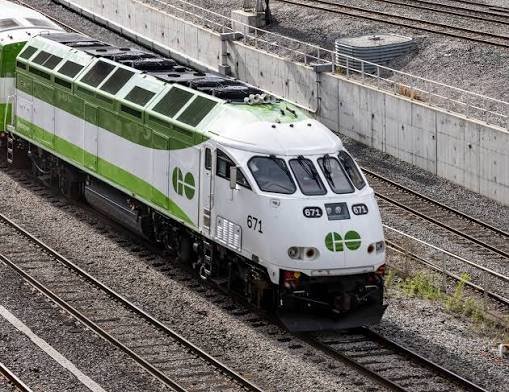 NOC = Network-Oriented Community
Phil Verster's GO Transit Vision
President & CEO of Metrolinx
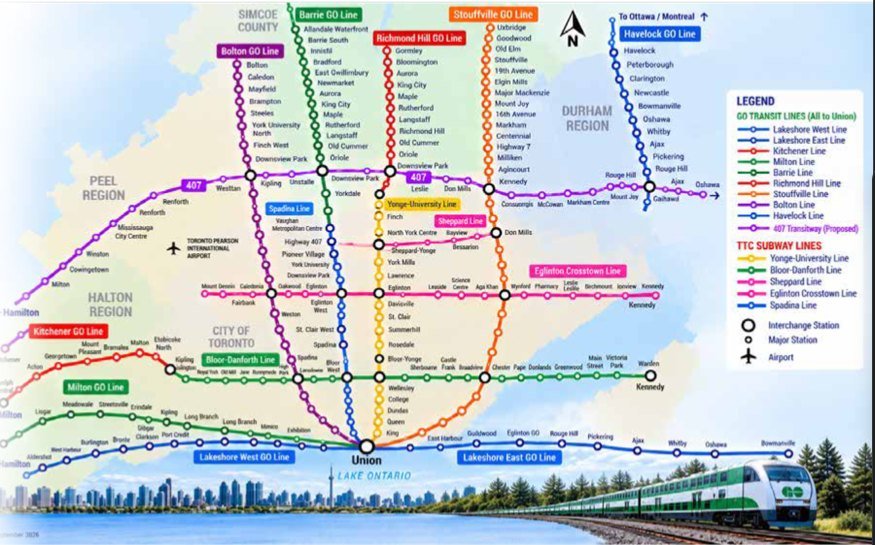
- Take the UP Express that goes from Toronto International Airport to Union Station and extend it up the Stouffville GO Line to Stouffville.
- Electrify the Stouffville GO Transit line and give GO Transit riders frequent service, more connectivity and access even to Toronto Pearson International Airport.
- Plan all GO stations as Network-Oriented Communities that include office, retail, institutional, residential, entertainment and parks.
Six shared goals
The Province, Metrolinx, Toronto, Markham, Stouffville and York Region must work together to accomplish the following goals:
Provide sustainable transportation choice.
Support compact urban land-use areas.
Foster safe, healthy and complete Network-Oriented Communities.
Enable an economically sustainable destination corridor.
Protect the environment.
Improve quality of life for citizens of Toronto, Markham & Stouffville.
From diesel commuter line to electric LRT
I support the GO Transit Vision and doing all things necessary to convert the Stouffville GO line (diesel) to LRT — electric, driverless, with automated train control — operating in 4 years, planning all GO stations as Network-Oriented Communities.
NOC Corridor Planning Objectives
407/GO government lands should only be sold to investors when the transit corridor lands have been planned and zoned to their highest and best use.
Underground high-voltage hydro transmission lines.
Bury hydro transformer stations, tank storm ponds and put parks on top.
Build public, separate schools and municipal facilities in multi-level school buildings at or near the NOC transit station.
Ensure daily shopping needs are located at or near the NOC station.
Plan complete, high-density NOCs that serve residents' everyday needs.
Develop 10% affordable housing at all NOC corridor stations.
Develop trails, parks and playfields throughout the 407/GO corridors.
Plan geofenced autonomous vehicle pilots around transit stations to handle the first mile/last mile (FM/LM) issues.
Plan rail corridors to be energy net-zero with a reduced carbon footprint.
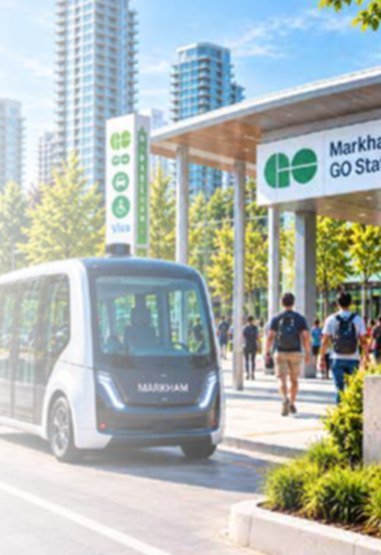
Pilot projects are a smart place to put stimulus dollars.
The provincial government, York Region, Toronto and Markham should put money behind piloting promising solutions that offer tangible benefits, de-risk future investments and create new markets for jobs for unemployed and underemployed young people.
Moving people north–south
In 2014, the Ontario Government announced plans to build the Yonge Subway Extension, electrify all the GO Transit rail lines, and move to all-day, 15-minute transit service. Toronto insisted the downtown relief line be built and operating one day before the Yonge subway extension to Hwy 7 opens.
Offload the subway
Metrolinx should develop a plan to offload riders to the Stouffville, Richmond Hill and Barrie lines and provide more station connectivity on these GO lines.
Fare integration
Fare integration would help offload Yonge Subway traffic to other GO lines, as people don't want to be charged two fares when they cross municipal boundaries or change from GO Transit or YRT service to TTC service.
Density along transit
Prioritizing densification along transit corridors will benefit long-term urban sustainability. NOC planning decisions must be guided by sound land use, transportation, energy and design rationale, aligned with environmental, economic and social sustainability principles.
Questions about Jim's plan?
Ask Sara, the campaign's assistant — talk or chat, and get answers in seconds. Or join the campaign and help build Markham's future.